Thursday, March 31, 2011

Gaming. The Battle for our future. (Cue dramatice thunder)

I'm torn.  I've watched Jane McGonagal's lecture on how Gaming can save our future, on how it can make us better people, and I've seen Seth Priebatsch's lecture on the way we'll be creating a level of gaming directly on top of our culture over the next few years.  I really love this idea, because, you know, reality is kind of boring as hell.  Gaming has the potential to create an augmented reality, a hypereality lumped on top of our own that can, and indeed is, exciting and may make us better human beings.
Pictured:  Reality.
The problem I have is this, and it shows in Priebatsch's lecture a little, but it is completely ignored in McGonagal's: that games are a great way to make money.  Off of you.  While you're playing.  It costs 15 bucks a month to keep a WoW account, and in 2008 they had 10 Million subscribers.   10 million people they have to keep playing.  10 Million people they need to keep playing in order to continue to sleep on pillows made of money.  Money they can use to buy cocaine, and possibly hookers.  So in to fund their hypothetical cocaine addictions, they turn to sneaky, underhanded ways to keep you playing.

All businesses, once they get to be too big and profitable, will eventually start using less than reputable techniques to control your money, but if this business is going to be built on top of the very fabric of reality, then they will, in effect, control your entire life.

As Spike Lee once said, "if you can control the media, you control the country" (or something very much to that effect--google it), so if this new media will be our entire reality, what kind of ethics can we expect from the companies controlling our interactive media?

Thursday, March 24, 2011

The Media Narrative and Culture

This isn't a new Idea.  I personally like to hear people who are funnier than I am talk about it.  The idea is that media, any media, controls us by presenting news as a story, and that story is all we're going to hear about.  Ever.  Oh, yeah, and this.

I think I can present this argument in the study of a single person, namely, John Singleton.

This dude.  As seen in an expertly taken picture by Bobak Ha'Eri.

John Singleton is a director.  And he's a pretty good one, or he was, I guess.  The point is that he made two movies in the early nineties called Boyz n the Hood and Higher Learning.  I submit that these movies as evidence for the danger of the single story.

Boyz is an awesome movie.  Singleton takes time to create characters and give each of them specific desires and motives, and each is different (Except for in the first half, when he's just doing Stand by Me).  The point is that I come away from that movie not feeling like I understand the culture of urban LA because its so complex.  This complexity is a mixture of poverty, social pressures, and competing personalities.  It seems real because Its taken from life, and is subtle and honestly crafted after Singleton's own experiences.

However, when Singleton tried to reclaim that same feeling with Higher Learning a few years later. Here Singleton actively drafted from stereotypes and crammed them together like a toddler playing with brown Scultpty clay and cat poop.  All the white people are Nazis, or Lesbians.  Last time I checked, I really didn't identify with either.  He's got THE Black athlete and THE Black stoner, so kudos for simplifying your own race, John.
No cowboys?  huh.  What about a pirate?  Where's their representation?
The movie, then comes up short.  Its not believable.  I don't know if its because of the blatant mixing of bad characters or the blatant mixing of stupid stereotypes of different ethnicities, but it didn't work.
Why, God? Why?

I think its because we, as culturally biased people, don't understand one another.  I know, I know, its simplistic, but I think its true.  Worst of all, we think we do.

Maybe someday we can all back up, look at the world, and collectively shrug.  And then the golden age of World peace can begin.


Cowboy Photo by Matthew Trump copyright 2004.  For funnier raging at the media visit Fatboy Roberts' Blog here.

Monday, March 7, 2011

Creativity and School

I recently watched Tim Brown's Lecture on creativity in children at play, as well as Sir Ken Robinson's Lecture on the idea of schools killing creativity.  Both of these short presentations left me with a slight sinking feeling in my gut, which I quickly dismissed as general crippling fear of the future (Due to my unwarranted and unearned crotchetiness), but it led me down a a very honest sort of thought process.

Me, circa 1995.  Was anyone ever so young and naive?   (Photo by M@rg.  I was surprised to see me on Wikimedia Commons, too.)

 A lot of the criticism in this area (and I hear a whole lot of it, being an education student), comes from bashing the very idea of curriculum.  And also teachers.  Theorists really hate teachers.
And so, presumably, do cartoonists.
Now I understand why people hate both of these ideas.  My parish priest once told me that when he was in college, those who couldn't hack it in the major programs would default into an education program.  I've had some apathetic teachers, sure, but for every terrible teacher, I had at least one (maybe one point five) teachers who were caring, and even encouraging.  Maybe I was lucky, but I'm not ready to write off America's Teachers just yet.
So is it Curriculum that's to blame?  I'm not ready to say that yet either.  Our standards are their to prepare students.  These are good standards, they make good, or at least proficient humans.  So if we have good teachers and good curriculum, what's the problem?

I think it's fear of failure.

And I think that because we want our students to be creative, but when they try something original, and it doesn't conform to the rubric or grading scale or whatever schools use, then those students get Bs.  If they do it well.  Or they fail.  We don't grade on creativity.  We're involuntarily discouraging it.

Tuesday, February 22, 2011

Art and I have a long awaited heart-to-heart

I've never been an "Art Person", per se.  And especially not a high-minded modern art kinda guy.  You see, Modern Art and I have an agreement:  if I stay away from Art, art agrees to stop keeping me awake at night with horrible doubts about my sanity and the nature of humanity.  Because who needs that?  Not me. 
Dammit, Marcel Duchamp, We had a deal!
I didn't come to this conclusion lightly.  Exit through the Gift Shop helped a lot.  So did the fact that Jackson Pollack exists, and that guy who made a cross out of pee.  If that is art, then I really, really have better things to do. 

However, I recently learned about the basics of aesthetic theory, and the different ways in which people can appreciate art and the principle which make things pleasing to the eye.  Now this is where my life and art begin to intersect.  See, I've made no secret of the fact that I absolutely love webcomics.  I fritter away hours sifting through the archives of amazingly animated, fantastically creative comics like Sam Logan's Sam and Fuzzy, Kate Beaton's Hark a Vagrant!, Evan Dahm's Order of Tales, Jeffery Rowland's Wigu and Overcompensating, Scott Kurtz's PvP, Penny Arcade, Kris Straub's Starslip, and Dresden Codak's Bad Science.

I know that sounds like a lot, but to be honest that's probably not even half of them. My god, I've just outed myself as a massive nerd.  It was bound to happen, I guess.  But the point is, these are all beautiful.  In order for me to follow a webcomic, I have to be sure of the artist's chops.  Now I can recognize and verbalize what I like about each comic, each style:  I can understand the use of continuity and composition in each frame.  I'm no critic, but I'm no longer illiterate to the art that actually goes into something I love and enjoy everyday. 

You may have hurt me in the past, Art, but I'm willing to to make this work if you are.  C'mere, ya big lug!

But not You, Jackson Pollack!  You make painting like baby.

Monday, February 7, 2011

Gender Stereotyping in Ads

After watching Killing Us Softly, a short talk on how advertising dehumanizes and objectifies women, I've become hypersensitive towards ads.  I can't watch an ad without trying to decipher the villainous intent behind any sort of ad.  I mean, they have a point, I know, but at the same time I think a lot of the more subtle stuff was a little too read into.
Obviously a Beer commercial, right?  What do you mean you don't see it?

Sunday, January 23, 2011

Visual Symbols

We all have some symbols that we immediately recognize as being important, or at least meaning something:  the dollar sign, McDonald's M's, traffic lights, those little Jesus fishes that people stick to their cars.  They all mean something to all of us collectively, but we each have our own personal visual symbols that speak to us on a more intimate level than our greater cultural symbols.  So i stopped and thought about some of my own visual symbols, and these are just a few of what I came up with:
Pic by Tom Morgan.

The Digital Envelope.
This symbol--and its one we probably all recognize--is now synonymous with almost all of our communication:  e-mail, text, voicemail, etc, and in our increasingly technological and connected world, this little symbol is the most likely one we are to see when someone is trying to communicate with us. 


The Gas Gauge:
Photo by Jackson Carson: 
I think there's a metaphor in there, too.

The gas gauge is pretty strange, in that it symbolizes a number of different things. The first and most cynical is poverty.  Or, rather that everything costs something, and it often takes money, or at least a continued investment, to keep things running.  It also holds a deep emotional resonance, as the gas gauge is a physical representation of anxiety and worry.  I rely on my car to get to school, work, and everywhere else I need to go, and there have been more than a few times when I've had to white-knuckle the steering wheel while I stare down at the orange gas light and empty gauge.  Even now, whenever I get behind the wheel of my car, I get that quick pang in the pit of my stomach, that little arrowhead of worry still stuck in my guts.


The Low Battery Light:

Photo by Matt Thomas.  Mine doesn't have a dead bird,
that might be a little too much even for me.
While I picked out the low battery icon as a purely visual symbol, I have to admit that my phone, as much of an ancient brick as it is, is an amazing barometer for my life.  My phone is tied immediately to my current stress level.  It reminds me that it is impossible to truly get away, and is a constant reminder of things I have to do, and many times, it is the way those things are delivered.  The more busy I am the more I use it, and it shows.  When I get busy, i often forget to charge it, and so I've had many nights trying to finish a project, and my phone will sit on my desk, a chirping, stalwart brick, reminding me that though I'm busy, I, like my phone, will eventually run out of juice, and will need to be recharged.  I can take that metaphor in stride, but it is the mornings I wake up after two or three hours of sleep. I reach for my phone, bleary-eyed and still exhausted, to silence the horrible alarm sounds, only to find the little battery icon is still a few bars short, in a sickly yellow or amber shade, and I have to shudder at how eerily accurate the symbolism has become.

Tuesday, November 30, 2010

Taking Classes for Grades.

I just read this essay from the Chronicle by "The Shadow Scholar." (Dramatic, I know.) I'm thinking a lot about it.

1)  I know these people, who just want grades, not to learn anything.
2)  I know these people, who would do this.
3)  Dammit.  I know these people.
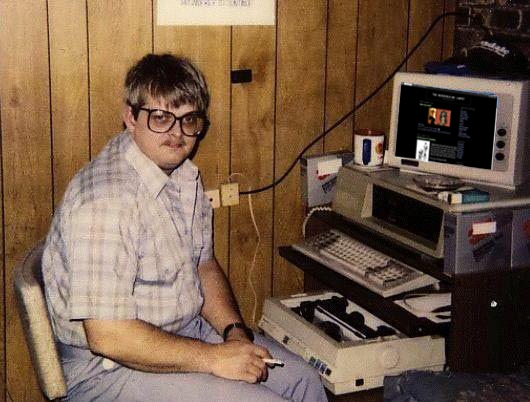
3a)  I bet the "Shadow Scholar" totally looks like this.
Besides my obvious, and familiar (Grr, I know these guys!) outrage,  there is kind of an underlying thought.

We, students, are not doing enough.  Its really that simple.  I remember in my freshman (sophomore?) year of college I was supposed to write an assignment for my American Lit class that would essentially be a proposal for a chapter to be included for an anthology.  I remember that I thought I should do it on humor (Ammurican humor), but do I remember what my argument was?  Do I remember what my proposal's main points were?  Do I even remember what short stories or essays I picked?

Nope, I sure don't.

Because I was doing it for a grade.  Sure I learned a lot in that class, and it was one of my favorite lit classes, but that assignment didn't mean crap to me.  It was a grade.

There's also a corollary to student's efforts, and that's this: Teachers Don't Let Students Do Enough.  Our Shadowy friend mentions that when he tried to get his independent study, an attempt  to get his novel published, approved, his faculty just sort of ignored it and made him return to his traditional classes.  Does publishing a novel have literary merit as part of an English program?  Undoubtedly, but when his interests were declined, he stopped going to class, and started writing papers for others' assignments.  He lost faith in the system.

In most of my education classes, I've been taught to use multiple learning strategies to encourage your student's personal involvement, but I've heard it in a lecture in every one of them.  The only class that's required me to actually do it was my class for special education students. 

Student engagement has been a tag for just about all of my posts on this blog.  Because it is that important.  Its the difference between enjoying something and learning it, or just doing it for a grade.  Flexibility is key in Learning.  and Technology is key in Flexibility.  Use any and all tools available to encourage your students to create something their proud of, not just chase a grade.

Photo exists in the Public Domain, taken from TheChive.com.